Residential Service

Backup Generator Installation

When a Texas storm knocks out the grid, the difference between a minor inconvenience and a real problem is whether your home still has power. roofio’s backup generator installation service keeps your home running the moment the lights go out — automatically, safely, and without you lifting a finger.

What’s Included

Generator Installation

As part of our whole-home energy and roofing services, we handle everything: sizing your system, coordinating the fuel line, wiring the transfer switch, and pulling permits for inspection. One team, one warranty, and a generator that’s ready when Texas weather isn’t.

Every installation starts with a full picture of your home’s electrical setup, not just a generator drop-off. Our licensed technicians handle:

  • Load calculation — reviewing your electrical panel and breaker box to determine how much power your home actually needs
  • Generator sizing — right-sizing the unit for whole-home coverage or essential-circuit backup
  • Fuel line coordination — connecting to natural gas or setting up a propane supply
  • Transfer switch installation — so your home switches to generator power automatically, with no manual hookup
  • Concrete pad placement — a proper outdoor foundation for the unit
  • Permits and inspection — we handle the paperwork so the system is fully code-compliant
  • Certified installation — trained on Generac, Kohler, and other leading generator brands
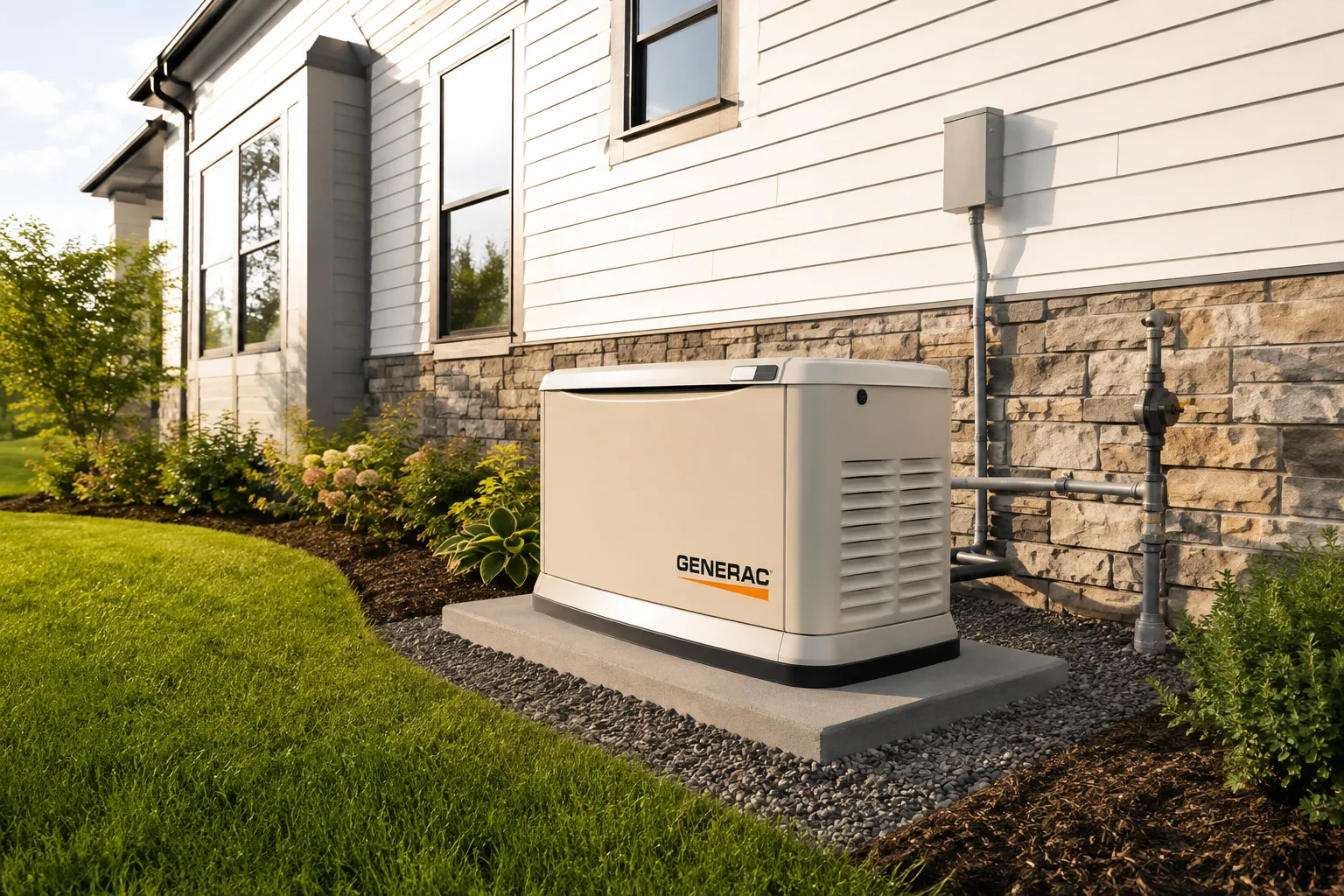
Standby generator installed on a concrete pad beside a home, shown as a general illustration of a whole-home standby setup

Compare Options

Whole-Home vs. Standby Generators

Not every home needs the same setup, and this is usually the first decision homeowners get stuck on.

A whole-home generator is sized to carry your entire house — HVAC, appliances, lighting, everything — through an extended outage without you having to prioritize what stays on. A smaller standby generator installation covers essential circuits only: refrigerator, sump pump, medical equipment, and a few rooms of lighting and outlets.

The right fit comes down to your home’s size, your must-keep-running appliances, and your budget. During your consultation, we run the load calculation and walk you through both options in plain terms — no oversized system you’re paying for and never using, and no undersized system that leaves you short when it matters.

Our Process

Our Generator Installation Process

  1. 1

    Request a Consultation

    We assess your home’s power needs, existing electrical panel, and where a generator would sit outside your home.

  2. 2

    Get a Custom Plan

    You get a sizing recommendation, generator brand options, and a transparent, itemized quote.

  3. 3

    Project Installation

    Licensed technicians handle the electrical, transfer switch, and fuel line work to code, on the schedule we agree to.

  4. 4

    Final Inspection & Warranty

    We test the system under load, walk you through how it works, and back the installation with our warranty.

Why roofio

Why Homeowners Choose roofio for Generator Installation

Request a Consultation
  • Licensed, Multi-Trade Expertise

    Our technicians are trained specifically on residential generator electrical work, not general handyman jobs.

  • Single Warranty Coverage

    One warranty-backed team, so you’re never stuck between the electrician and the generator manufacturer.

  • Coordinated Permits & Inspections

    We manage the paperwork and code compliance so you don’t have to chase it down.

  • Transparent Pricing

    A clear, itemized quote before any work starts — no surprise add-ons after installation day.

  • Solar & Battery Expertise, Built In

    As a NABCEP-certified solar and FranklinWH-certified battery installer, we can help you weigh a standby generator against battery backup — or a combination of both — based on how your home already uses energy.

    Explore Solar & Energy Backup

Common Questions

Frequently Asked Questions

Talk to our team
How much power do I need for a whole-home generator?

It depends on your home’s square footage and which appliances you want to keep running. We calculate your home’s actual electrical load during the consultation rather than guessing off square footage alone.

What’s the difference between a portable generator and a standby generator installation?

A portable generator has to be manually connected during an outage and typically can’t run your whole home. A standby or whole-home generator installation is permanently wired to a transfer switch and starts automatically — no extension cords, no manual hookup.

Do I need a permit for backup generator installation?

Yes, in most Texas municipalities. We handle the permitting and schedule the inspection as part of the installation, so it’s already accounted for in your quote.

Will my generator run on natural gas or propane?

Both are common fuel options. If you already have a natural gas line, we can often tie into it directly; otherwise, we’ll help you plan for a propane tank sized to your generator.

How long does generator installation take?

Most residential installations are completed in 1–2 days once permits are approved, depending on the fuel line and electrical panel work required.

Get Started

Ready to Stop Worrying About the Next Power Outage?

Get a custom plan and transparent quote for backup generator installation from a licensed, warranty-backed team.